Architecture Assessment
Evaluate architecture patterns, dependencies and design decisions against workload requirements and AWS architecture best practices, highlighting practical improvements that align with the Well-Architected Framework.

SecureLink provides AWS Well-Architected Review in Saudi Arabia for organizations that want an evidence-led assessment of AWS workloads. Our AWS architecture review in Saudi Arabia evaluates workload design and operating practices against the AWS Well-Architected Framework, helping teams identify risks and prioritize improvements across security, reliability, performance efficiency, cost optimization and operational excellence.
The review is tailored to the workload, its business importance and the evidence available. Findings are translated into prioritized recommendations that help technical teams decide what to address first, why it matters and how to plan remediation.

Review architecture decisions against workload goals and technical requirements.
Identify gaps and risks that could affect workload outcomes.
Build a practical improvement roadmap based on risk and business impact.
Examine workload design across the six Well-Architected pillars.
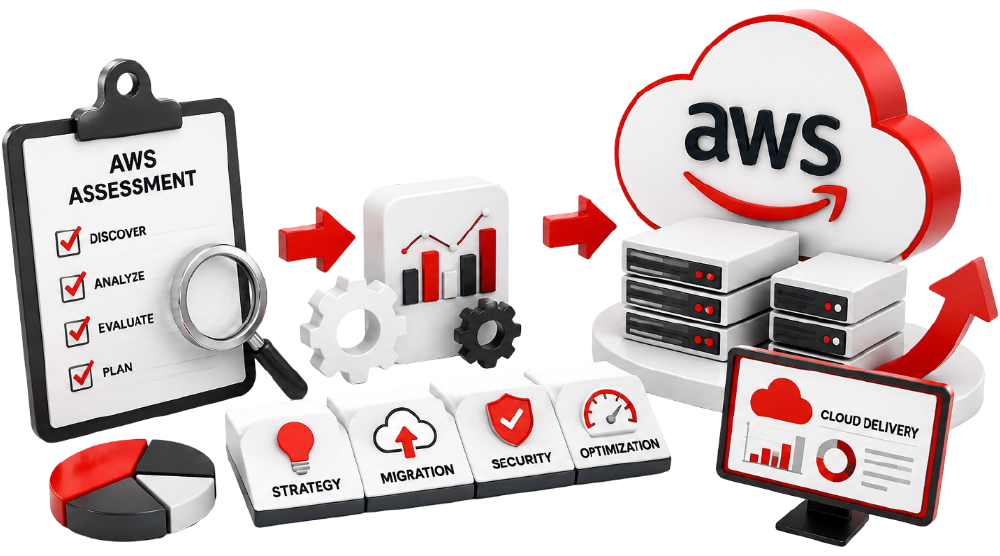
SecureLink helps organizations turn AWS requirements into practical architecture and delivery decisions. We assess business objectives, workload characteristics, technical constraints and the operating model before recommending the right AWS approach.
Whether you need a review before a major launch, after an architecture change or as part of ongoing improvement, the assessment is scoped around the workload, its dependencies, business requirements and the decisions your team needs to make.
DISCUSS YOUR AWS REQUIREMENTS →The review follows a consistent assessment structure while accounting for each workload's architecture, business criticality, operating practices and constraints.
Evaluate architecture patterns, dependencies and design decisions against workload requirements and AWS architecture best practices, highlighting practical improvements that align with the Well-Architected Framework.
Examine identity, protection, monitoring, backup, recovery and resilience practices within the agreed review scope.
Identify potential performance bottlenecks, inefficient resource choices and opportunities through an AWS workload optimization assessment that aligns AWS consumption with demand and workload requirements.
Review observability, deployment practices, operational readiness and continuous improvement processes.
The assessment examines the six pillars of the AWS Well-Architected Framework, using workload evidence and stakeholder input to develop actionable findings.
Review how teams operate, observe and improve workloads, including monitoring, safe changes and response processes.
Examine identity and access, data protection, detection, infrastructure protection and incident preparedness.
Review recovery design, fault tolerance, scaling and the way workload resources meet performance requirements.
Consider resource utilization, cost-aware architecture choices and relevant sustainability opportunities within the workload.
A useful review connects technical findings to business impact, clear ownership and an achievable remediation sequence.
Scope workload purpose, criticality, dependencies, users and service-level expectations.
Review available diagrams, configuration details, operational evidence and stakeholder input against relevant framework practices.
Rank findings by risk, business relevance, effort and dependency so teams can plan the next steps.
A structured process makes the review clear, collaborative and focused on AWS architecture best practices, with recommendations that teams can prioritize and act on.
Agree workload boundaries, business objectives, stakeholders, review evidence and expected deliverables.
Evaluate architecture and operating practices across the relevant Well-Architected pillars.
Document gaps, risks, strengths and potential improvements, supported by the evidence available.
Group recommendations by urgency, business impact, effort and technical dependencies.
Present findings and agree a practical roadmap; remediation work can be separately scoped if required.
A consulting engagement should produce practical outputs that help technical and business teams make decisions, prioritize work and move into implementation with clear ownership.
Summarize workload scope, architecture components, dependencies and operating context covered during the review.
Record relevant strengths, gaps and risk areas against the applicable Well-Architected pillars.
Provide recommended actions organized around risk, business impact, effort and dependencies.
Highlight relevant identity, data protection, monitoring, backup, recovery and resilience considerations.
Outline suggested remediation phases, potential dependencies and ownership considerations for planning purposes.
Present findings in a clear summary so technical and business stakeholders can align on the next steps.
AWS architecture review is useful when an organization needs experienced guidance before committing to a major architecture, implementation or modernization decision.
Review the design of a new or substantially changed workload before it becomes business-critical.
Check whether significant changes to services, integrations or deployment patterns introduce new risks.
Assess resilience, recovery assumptions, monitoring and operational readiness for important workloads.
Review workload performance design, scaling choices and monitoring evidence to identify improvement opportunities.
Examine cost-aware design and resource utilization as part of a broader workload architecture review.
Use periodic review findings to help prioritize changes as workload demands, risks and operating practices evolve.
The right consulting relationship should connect architecture, implementation and operational priorities rather than treating every AWS requirement as an isolated technology project.
Can the team assess workload decisions against the AWS Well-Architected Framework pillars?
Will findings include clear remediation guidance and useful prioritization?
Does the assessment consider architecture evidence, operational practices and relevant security controls?
Are review boundaries, outputs, stakeholder responsibilities and follow-on options agreed upfront?
SecureLink supports organizations in Saudi Arabia with workload architecture assessments aligned to business priorities, technical constraints and operational needs. The review scope is agreed with stakeholders before assessment begins.
Review workloads where availability, security, performance or operational consistency are important to business outcomes.
Identify architecture gaps and provide teams with a clearer view of potential risks and improvement priorities.
Turn review findings into an achievable roadmap that reflects impact, effort and technical dependencies.
SecureLink focuses the review on workload context, framework-aligned assessment and clear recommendations, helping stakeholders understand where improvements may strengthen workload outcomes.
Review workload architecture against the relevant Well-Architected pillars and business requirements.
Surface relevant concerns and explain their potential impact to support informed remediation decisions.
Organize recommended actions around urgency, business impact, effort and dependencies.
Prioritization decisions, technical priorities and handover requirements are kept clear so internal teams can operate the resulting environment.
Tell SecureLink about your AWS workload, business objectives and current architecture concerns. We can discuss a suitable Well-Architected Review scope, evidence requirements and expected deliverables.
Answers about the AWS Well-Architected Framework review process, workload assessment, findings and remediation planning in Saudi Arabia.