AWS CI/CD Pipeline Implementation
Connect source control, automated builds, tests, artifacts and deployment stages in a release workflow designed for your application.

SecureLink provides AWS DevOps consulting in Saudi Arabia organizations can use to improve build, test, release and deployment workflows. We help teams plan CI/CD pipelines, reduce repetitive manual work, standardize environment changes and make delivery processes easier to manage.
Our scope can include AWS CI/CD pipeline implementation, AWS DevOps automation, infrastructure as code and deployment workflow design, aligned with your application architecture, toolchain, security requirements and release process.

Automate repeatable build, test and release stages.
Manage infrastructure changes as reviewed code.
Make deployments more consistent across environments.
Build appropriate controls into the release process.
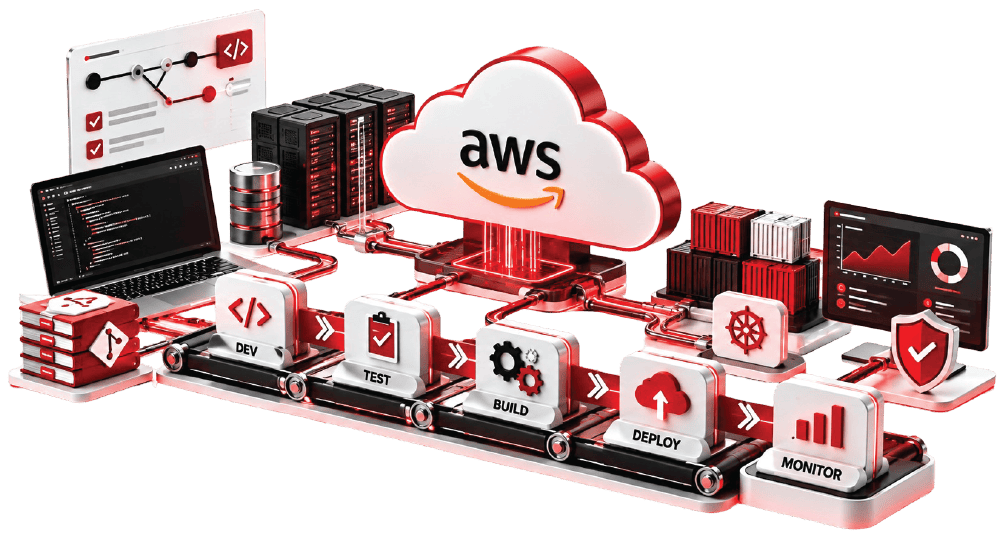
SecureLink helps teams review how code moves from development through testing and into production. We identify manual handoffs, inconsistent configurations and release bottlenecks, then shape a practical DevOps approach around your existing applications and AWS environment.
Depending on scope, this can include CI/CD pipeline design, infrastructure as code, deployment automation, environment promotion, approval workflows, testing gates, access controls and technical handover.
PLAN YOUR AWS DEVOPS WORKSTREAMS →Practical delivery improvements start with the way your team builds, tests, deploys and manages changes today.
Connect source control, automated builds, tests, artifacts and deployment stages in a release workflow designed for your application.
Reduce repetitive operational steps through scripted workflows, pipeline triggers, standardized tasks and reliable release procedures.
Define reusable infrastructure templates, version-controlled changes and review practices that help keep environments consistent.
Structure environment promotion, approvals, configuration handling and rollback planning around your operational requirements.
Each workstream is scoped around your toolchain, release frequency, environment structure and control requirements.
Map source changes to the right build, test, artifact and release steps, with clear outcomes for each pipeline stage.
Standardize how AWS resources are defined, reviewed, promoted and updated across the required environments.
For organizations seeking AWS deployment automation on AWS, we standardize release steps, manage environment-specific configuration, and build in appropriate validation, approval, and rollback safeguards.
Include useful logs, deployment status, test results and operating instructions so teams can respond to issues.
Pipeline improvements should fit your current repositories, build tools, application architecture and release controls.
Review manual steps, build and test stages, deployment dependencies, environment differences and common release issues.
Plan or refine automated workflow stages, release conditions, permissions and integrations based on the agreed design.
Improve consistency with clear promotion rules, test gates, approvals, deployment records and documented recovery steps.
A clear delivery process helps connect automation priorities to measurable workflow improvements and team ownership.
Understand application architecture, repositories, current release steps, environment structure and delivery bottlenecks.
Define the target pipeline, automation boundaries, infrastructure approach, access model and release controls.
Configure agreed CI/CD workflows, infrastructure definitions and deployment automation components.
Test pipeline behavior, environment promotion, permissions, failure handling and release acceptance criteria.
Provide agreed documentation and operational guidance so teams can run and maintain the workflows.
Deliverables are agreed at the start and tailored to the automation priorities, technical estate and internal team responsibilities.
Document stages, triggers, artifacts, required tests, approvals, deployment targets and workflow ownership.
Define the agreed templates or modules, version-control approach, environment variables and change-review process.
Set out the deployment workflow, environment promotion rules, configuration requirements and rollback considerations.
Document the appropriate access controls, protected secrets, test checks and approval steps included in scope.
Record agreed test scenarios, results, known constraints and practical acceptance criteria for the delivered workflows.
Provide relevant operating instructions, troubleshooting guidance and knowledge transfer for ongoing maintenance.
DevOps consulting is useful when current build and release processes are difficult to repeat, scale, audit or maintain.
Standardize repetitive steps and reduce reliance on individual team members to perform releases manually.
Bring agreed automated checks earlier into the workflow to provide feedback before changes reach later environments.
Use version-controlled infrastructure definitions and repeatable provisioning practices to help reduce configuration drift.
Structure pipelines and deployment stages to support a release cadence suited to the application and its operational risks.
Introduce reviewable infrastructure changes, controlled promotion and documented validation before applying updates.
Improve visibility of pipeline runs, test results, deployment approvals and changes across the delivery lifecycle.
The right partner should understand both the technology and the day-to-day release process your teams need to operate.
Can the team align pipeline architecture and AWS services with your application and release needs?
Will the proposed workflows work with your source control, build tools, tests and deployment targets?
Are permissions, secrets, reviews, approvals and relevant validation steps considered from the start?
Are the workflows documented so internal teams can maintain, troubleshoot and improve them after handover?
SecureLink can shape the engagement around your current engineering practices, AWS environment, business priorities and required release controls.
Define consistent build, test and deployment workflows suited to the application lifecycle and release cadence.
Align pipeline permissions, approvals and deployment records with internal policies and applicable business requirements.
Provide practical documentation and knowledge transfer to support adoption by engineering and operations teams.
SecureLink focuses on practical automation, clear delivery workflows and maintainable handover so your team can understand how the pipeline operates and what it is designed to achieve.
Workflows are planned around your repositories, application architecture, testing needs and deployment targets.
Access, secrets, approvals and suitable validation checks can be considered as part of the agreed delivery design.
Infrastructure as code practices can make changes easier to review, reproduce and track across environments.
Agreed documentation and knowledge transfer help engineering and operations teams maintain the resulting workflows.
Tell SecureLink about your current pipeline, deployment challenges, AWS environment and release goals. We can help define a practical DevOps scope and implementation approach.
Answers about AWS CI/CD pipeline implementation, DevOps automation, infrastructure as code and deployment workflows in Saudi Arabia.