Security Service Governance
Service scope, responsibilities, priorities, meeting cadence, escalation paths, risk actions and management reporting are maintained as part of the operating model.

SecureLink provides managed cybersecurity services in Saudi Arabia for organizations that need continuous protection, coordinated security operations and clear accountability across endpoints, networks, cloud platforms, identities, vulnerabilities and incident response.
Managed cybersecurity is the coordinated, ongoing management of selected security capabilities. It connects technology operations, risk decisions, incident readiness and management reporting so security work does not stop after an assessment or implementation project.
SecureLink begins by confirming the assets, systems, users, locations, technology stack and business services included in scope. We then document responsibilities, operating routines, escalation paths, reporting requirements and measurable priorities. This creates a practical service boundary and avoids vague promises such as “complete protection.”
For organizations comparing cybersecurity services in Saudi Arabia, the most important question is not how many tools a provider lists. It is whether the provider can explain what will be managed, how often it will be managed, who owns each decision, what evidence will be produced and how unresolved risks will be escalated.
When the requirement is a time-bound assessment, roadmap or implementation project, review our Cybersecurity Consulting Services in Saudi Arabia. Organizations that need fractional executive security leadership, governance direction and stakeholder oversight can use our vCISO Services in Saudi Arabia.
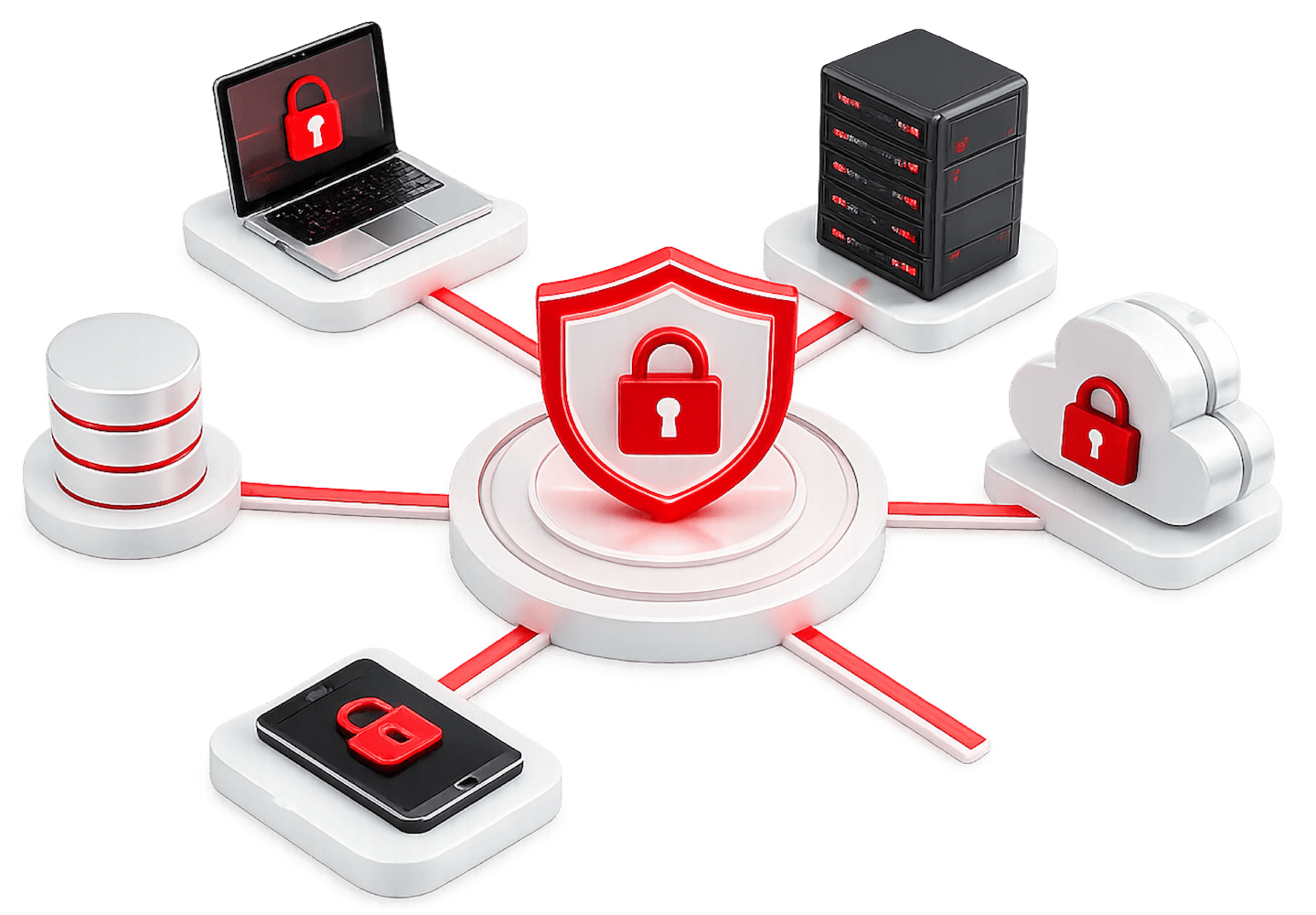
Tools can generate alerts and data, but an effective managed service also needs ownership, prioritisation, escalation and business decisions.
The final service is tailored to the agreed environment. The areas below can be combined into a practical operating scope based on business risk, existing technology, internal capability and required service coverage.
Service scope, responsibilities, priorities, meeting cadence, escalation paths, risk actions and management reporting are maintained as part of the operating model.
Coverage health, policy status, alerts, exclusions, agent deployment issues and remediation actions can be monitored for agreed endpoint security platforms.
Security policy reviews, control status, remote access oversight, security-event coordination and improvement actions for agreed network technologies.
IT security controls and hardening →Security posture findings, identity risks, configuration exceptions, workload coverage and remediation coordination for cloud or hybrid environments in scope.
Cloud IT management and security →Privileged access risks, inactive accounts, authentication controls, access-review actions and identity-security exceptions can be tracked and coordinated.
Findings are validated, prioritised, assigned and followed through to remediation or accepted exception. Formal testing can be commissioned separately when controlled validation of specific assets is required.
Penetration testing and VAPT services →Escalation contacts, severity criteria, communication paths, response responsibilities, incident records and post-incident actions are maintained and exercised.
Where 24/7 event monitoring is required, the managed cybersecurity programme can integrate with continuous monitoring, alert triage and investigation workflows within the agreed service arrangement.
24/7 Managed SOC services →The right model depends on the skills already available internally, the technologies in use and the amount of operational ownership the organization wants SecureLink to assume.
Service boundary: the statement of work should identify included assets, technologies, locations, operating hours, response responsibilities, dependencies and exclusions before recurring operations begin.
Effective managed security depends on explicit ownership. SecureLink documents who performs recurring tasks, who approves changes, who accepts risk and who must be contacted during an incident.
The service is established in stages so scope, access, responsibilities and priorities are clear before recurring operations begin.
Identify business priorities, systems, locations, users, security technologies, exclusions and the outcomes the service must support.
Review available asset data, control coverage, open risks, recurring issues, dependencies and existing response procedures.
Establish approved access, data sources, ticketing workflows, communication channels and technology integrations required for delivery.
Confirm contacts, decision rights, incident severity, approval requirements, escalation routes and service meeting cadence.
Run agreed recurring activities, investigate findings, coordinate actions, maintain records and escalate issues according to the service model.
Review service results, control gaps, incidents, overdue actions, trend data and improvement priorities with responsible stakeholders.
Strong managed cybersecurity services produce usable evidence, not only verbal reassurance. Deliverables should help technical teams act, help managers prioritise and help governance stakeholders understand remaining risk.
Cybersecurity risk cannot be reduced to zero. The service should clearly show coverage, limitations, unresolved issues and decisions required from the organization.
The exact format and frequency are defined in the service agreement and can be adapted to different stakeholder groups.
Organizations in Riyadh and other Saudi regions need a delivery model that clearly defines remote operations, scheduled governance, escalation contacts and any on-site activities included in the agreement.
A dependable service should be measured through documented coverage, named ownership, escalation quality, reporting, action completion and continuous improvement rather than broad promises of complete protection.
Assessment and implementation support for applicable National Cybersecurity Authority control requirements.
View NCA compliance service → Financial sector SAMA Cybersecurity FrameworkOperational support for financial organizations addressing SAMA cybersecurity governance and control expectations.
View SAMA framework service → Telecom and technology CST CRF ComplianceFocused gap assessment, implementation and evidence support for applicable CST CRF requirements.
View CST CRF service → Governance and risk GRC Services in Saudi ArabiaBroader governance, risk and compliance services for policies, risk management and control oversight.
View GRC service →Managed cybersecurity can support operational control evidence, incident records and action tracking. It does not automatically certify compliance, replace a formal assessment or remove the organization’s legal and regulatory responsibilities.
The operating model can be adapted to organization size, sector, technology complexity, operating hours and regulatory exposure. Coverage is prioritised around critical services, sensitive information, user access and the systems that create the greatest business impact.
Prioritised security coverage, practical action plans and access to managed expertise without building every function internally.
Cybersecurity solutions for SMEs →Structured ownership, evidence, risk action tracking and integration with applicable government cybersecurity requirements.
Government cybersecurity compliance →Managed control oversight, incident coordination, identity security and clear linkage to sector-specific risk and compliance programmes.
Coordination between enterprise IT security and specialist operational-technology requirements, with clear boundaries for industrial systems.
OT cybersecurity services →Protection of identities, endpoints, applications and sensitive information with coordination to privacy and data-governance programmes.
Consistent security oversight across locations, cloud services, remote users and third-party platforms, supported by central reporting.
A managed service needs more than a list of activities. It also needs agreed severity rules, communication routes, decision rights and review cycles so important issues reach the correct people without delay.
Incidents, vulnerabilities and service issues are classified using agreed criteria such as affected assets, business impact, exposure and urgency.
Documented priority rulesHigh-priority issues are routed to authorised contacts through agreed communication channels, with clear information about the event and required decisions.
Clear escalation ownershipRegular reviews cover incidents, control health, overdue actions, recurring causes, service blockers and the next improvement priorities.
Measurable follow-throughPolicy changes, exclusions, integrations and remediation steps follow agreed approval processes where they could affect users, systems or operations.
Controlled implementationResponsibilities are documented when cloud providers, software vendors, telecom operators or other service partners are required to resolve an issue.
Fewer ownership gapsContact lists, procedures, records and handoff requirements are maintained so security work remains traceable during staff changes or operational disruption.
Consistent service deliveryClear answers about scope, responsibilities, reporting, compliance support, onboarding and how the service works with internal teams.
Managed cybersecurity services provide ongoing management of security controls, operational processes, risk actions, incident coordination and reporting. The service can cover endpoints, networks, cloud platforms, identity systems and other agreed parts of the organization’s environment.
A Managed SOC focuses primarily on continuous monitoring, alert triage, investigation and security-event response. Managed cybersecurity is broader: it can coordinate SOC monitoring with control management, vulnerability remediation, identity security, incident readiness, governance and continuous improvement.
Cybersecurity consulting is generally advisory or project-based, such as assessments, roadmaps and implementation guidance. Managed cybersecurity is an ongoing operating service with recurring activities, assigned responsibilities, reporting, escalation and improvement cycles.
The agreed scope may include endpoint security, network controls, cloud security, identity and access security, vulnerability management, incident coordination, security reporting and oversight of selected security technologies. Final coverage depends on the environment and service agreement.
Managed cybersecurity can support operational evidence, control monitoring, action tracking, incident records and reporting relevant to frameworks such as NCA, SAMA and CST CRF. It does not by itself certify compliance or replace legal, regulatory or audit advice.
Yes. SecureLink supports organizations in Riyadh and across Saudi Arabia. The delivery model can combine remote operations, scheduled governance meetings and on-site activities where agreed in the service scope.
No. The service is designed to work with internal IT, risk, compliance and business owners. Responsibilities are documented so SecureLink can manage agreed security activities while internal teams retain authority over business systems and operational decisions.
Reporting can include service coverage, incidents, vulnerabilities, control health, overdue actions, risk trends, exceptions, service levels and management recommendations. The reporting cadence and audience are agreed during onboarding.
Onboarding time depends on environment size, technology access, asset information, integrations and the agreed scope. A phased onboarding plan is used to confirm priorities, responsibilities, escalation paths and measurable service outcomes.
Evaluate scope clarity, named responsibilities, escalation procedures, reporting quality, technology compatibility, Saudi regulatory awareness, response arrangements and the provider’s ability to show how risks and actions will be managed over time.
Speak with SecureLink about your current security tools, locations, users, cloud platforms, compliance drivers and internal capabilities. We will help define a practical managed scope with clear responsibilities and reporting.
Service availability, response arrangements, on-site support and technology coverage are subject to assessment and the final service agreement.